









The best Userpilot alternatives & competitors, compared

Contents
1. PostHog
- Founded: 2020
- Similar to: Pendo, Amplitude
- Typical users: Engineers and product teams
- Typical customers: Mid-size B2Bs and startups
What is PostHog?
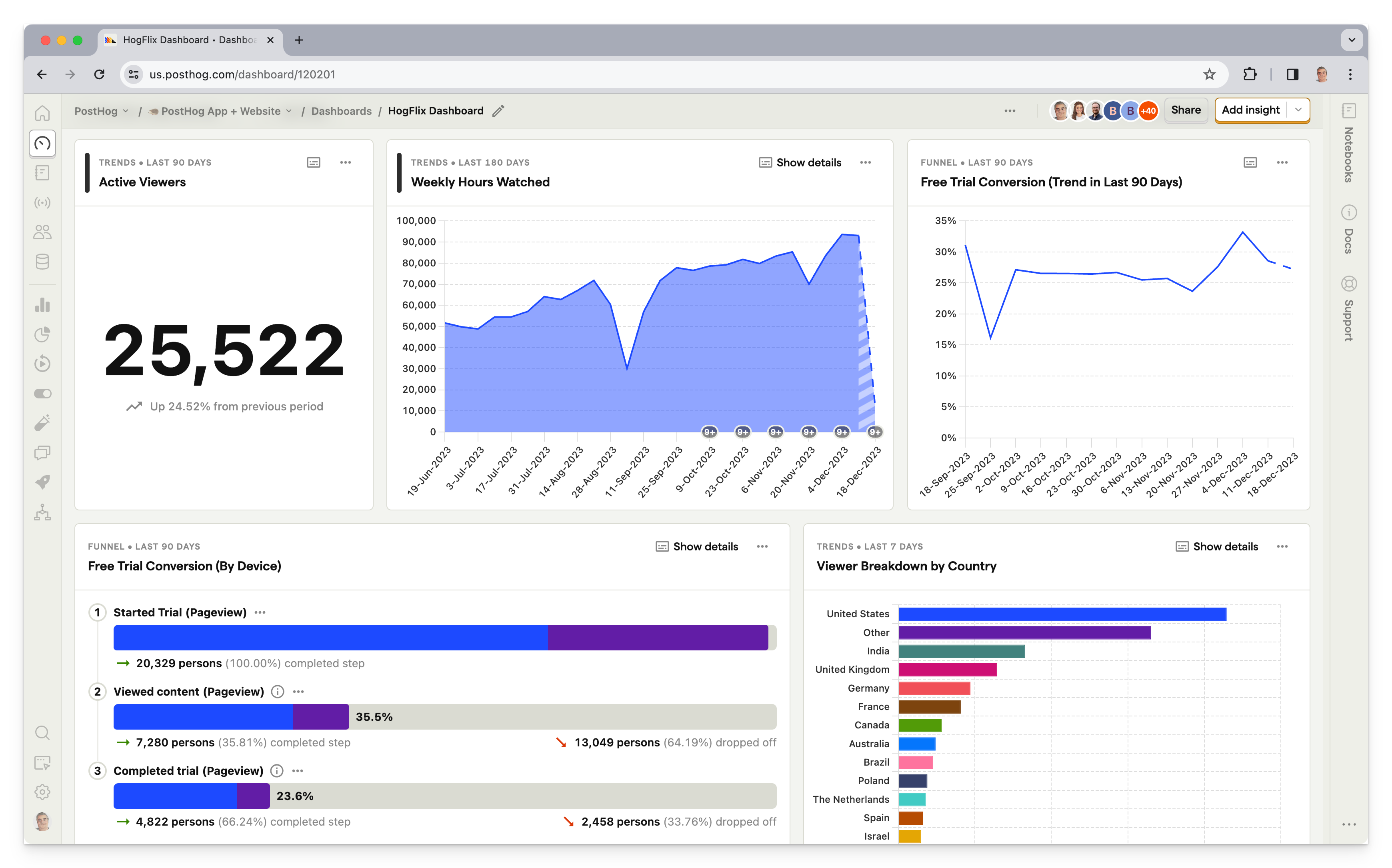
PostHog (that's us 👋) is an open-source platform that combines product analytics, session replay, user surveys, A/B testing, and feature flags. This means it's not only an alternative to Userpilot but also tools like Mixpanel and LaunchDarkly.
According to BuiltWith, as of May 2024, 4,661 of the top million websites deploy PostHog, significantly more than the 556 who use Userpilot.
Key features
📈 Product analytics: Custom trends, funnels, user paths, retention analysis, and segment user cohorts. Also, direct SQL querying for power users.
📺 Session replays: View exactly how users are using your site. Includes event timelines, console logs, network activity, and 90-day data retention.
💬 Surveys: Target surveys by event or person properties. Templates for net promoter score (NPS), product-market fit (PMF) surveys, and more.
🧪 A/B tests: Optimize your app and website with up to nine test variations and track impact on primary and secondary metrics. Automatically calculate test duration, sample size, and statistical significance.
🚩 Feature flags: Rollout features safely with local evaluation (for faster performance), JSON payloads, and instant rollbacks.
How does PostHog compare to Userpilot?
Although PostHog doesn't have product tours, tooltips, or guides, it does include all the other features of Userpilot and more. This includes being free and self-serve, as well as no extra charge for hosting your data in the EU.
Why do companies use PostHog?
According to reviews on G2, companies use PostHog because:
It replaces multiple tools: PostHog can replace Userpilot (product analytics and surveys), Fullstory (session replay), and LaunchDarkly (feature flags and A/B testing). This simplifies workflows and ensures product data is in all one place.
Pricing is transparent and scalable: Users appreciate how PostHog's pricing scales as they grow. There's a generous free tier they can use forever.
They need a complete picture of users: PostHog includes every tool necessary for understanding users and improving products. This includes funnels to track conversion, replays to see where users get stuck, statistically significant improvements with A/B tests, and feedback gathering with surveys.
Bottom line
For teams looking for all the tools they need to improve their products, PostHog makes for a great alternative. This is especially true for startups and scaleups thanks to it having a generous free tier.
2. Pendo
- Founded: 2013
- Similar to: PostHog, Amplitude
- Typical users: Product managers and customer success teams
- Typical customers: Small and mid-market B2C apps

What is Pendo?
Pendo is a product experience platform that offers session replay, user feedback, product analytics, in-app guides, and product validation tools. It's primarily used by product managers and customer success teams.
According to BuiltWith, 3,166 of the top million websites deploy Pendo as of May 2024. This is just under 6x the 556 that use Userpilot.
Key features
📘 In-app guides: Deliver personalized guidance to customers inside your app, without changing the code.
📣 User feedback: A centralized location to capture product feedback. Capture manually or with in-app prompts.
📊 Product analytics: Learn how users are using your app with event autocapture. Analyze with funnels, trends, and retention analysis.
📹 Session replay: Watch real users use your product and understand the behavior behind your analytics data.
🛣️ Product validation and roadmaps: Manage your backlog and plan your roadmap to create alignment.
How does Pendo compare to Userpilot?
Pendo is the most similar alternative to Userpilot. It includes all of the key features and more (like roadmaps and EU hosting).
Why do companies use Pendo?
According to G2 reviews, customers use Pendo for:
Customer support and feedback: Product and customer support value Pendo for its feedback collection and roadmapping capabilities. Users like how it helps them figure out what to work on next.
Improving onboarding: Pendo's in-app guides combined with analytics features facilitate experimenting with new onboarding flows and improving user adoption.
Product planning: Pendo's data tools, product validation, and roadmap features help align internal teams and stakeholders on product development.
Bottom line
Pendo makes for a solid alternative to Userpilot thanks to its matching feature set while also being self-serve. Pendo's opaque pricing can be a turnoff to some, though.
3. Whatfix
- Founded: 2014
- Similar to: WalkMe, Chameleon
- Typical users: Enterprise healthcare, financial services, and HR companies
- Typical customers: Education and training teams, HR
What is Whatfix?
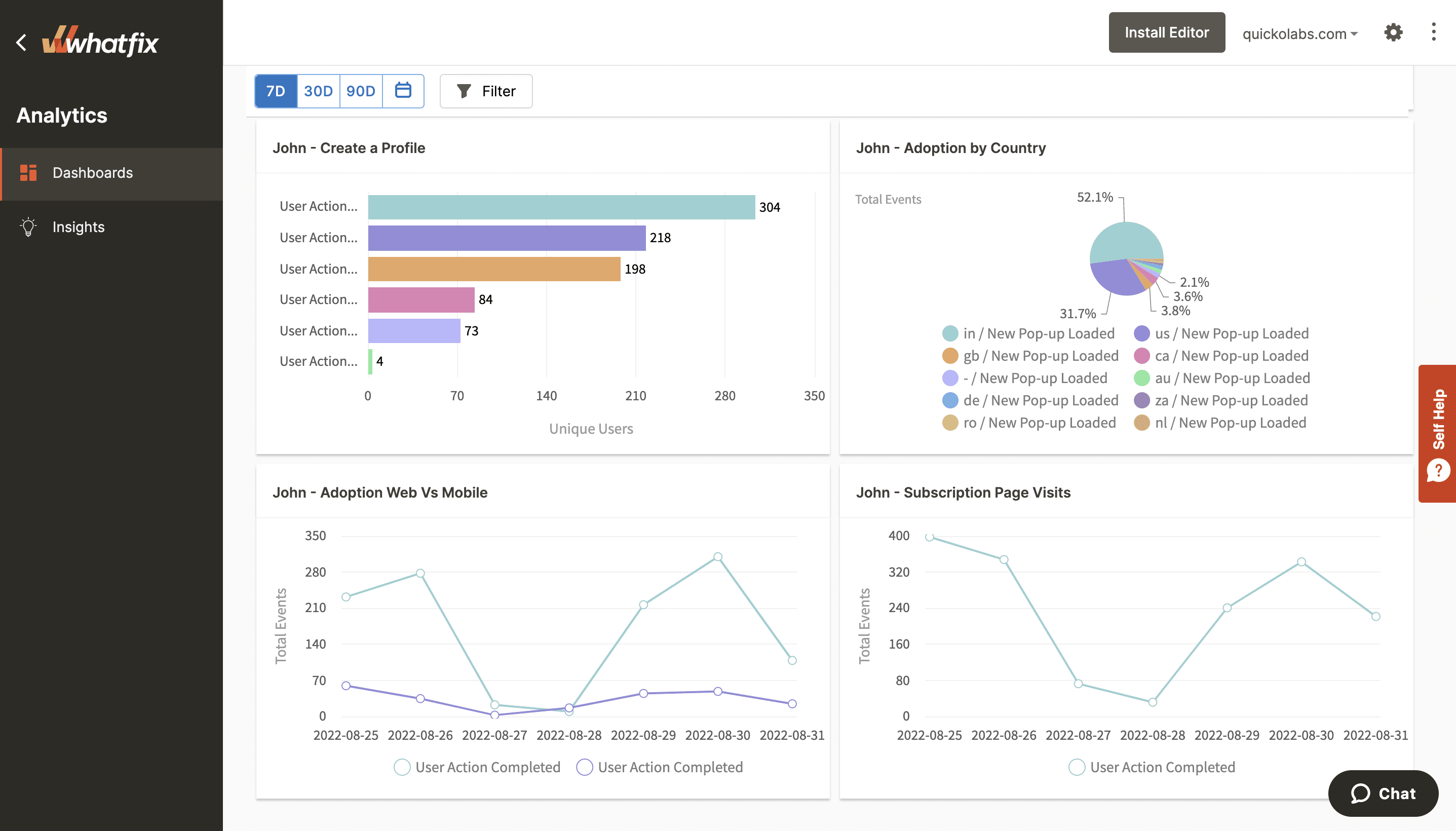
Whatfix is a digital adoption and product analytics platform built for enterprises. It includes guidance, feedback, and content tools to help with transformation, training, and onboarding. Teams can create and manage content, deliver it to specific users in-app, and measure its impact. Whatfix also offers personalizations, automation, and integrations to optimize workflows and app usage.
According to BuiltWith, as of May 2024, 243 of the top million websites deploy Whatfix. Just under half of the 556 who use Userpilot. This does undercount internal or backend usage, though.
Key features
🧳 Guidance: Add interactive in-app guidance, contextual support, and announcements to your app easily.
📈 Product analytics: Autocapture user behavior and analyze with trend, funnel, and retention graphs.
📝 Content management: Create and manage support content like e-learning materials and product announcements, no coding required.
🗣️ In-app messaging: Make announcements, drive adoption of new features, and help users when they get stuck.
📋 Surveys: Collect feedback and NPS responses through in-app surveys.
How does Whatfix compare to Userpilot?
Whatfix is more of an enterprise tool than Userpilot is. It includes more tools for internal teams to use to increase adoption, but at a broad level, its feature set is very similar to Userpilot.
Why do companies use Whatfix?
According to G2 reviews, users like Whatfix the most for:
Easy guidance tools: Whatfix enables teams to easily drive product adoption through onboarding flows, tooltips, and widgets.
Help managing complexity: Users often mention using Whatfix on their complicated pages, helping them effectively guide users and adapt well to complex sites.
Support: Whatfix provides a collaborative, responsive support team, helping users get a solution tailored to their needs.
Bottom line
For larger enterprises needing tools for internal and external product adoption, Whatfix can make for a solid alternative. The lack of free plan and opaque pricing makes it tough to recommend to smaller teams, though.
4. Chameleon
- Founded: 2015
- Similar to: Userflow, Pendo
- Typical users: Product managers and product marketers
- Typical customers: Growth-stage SaaS companies
What is Chameleon?
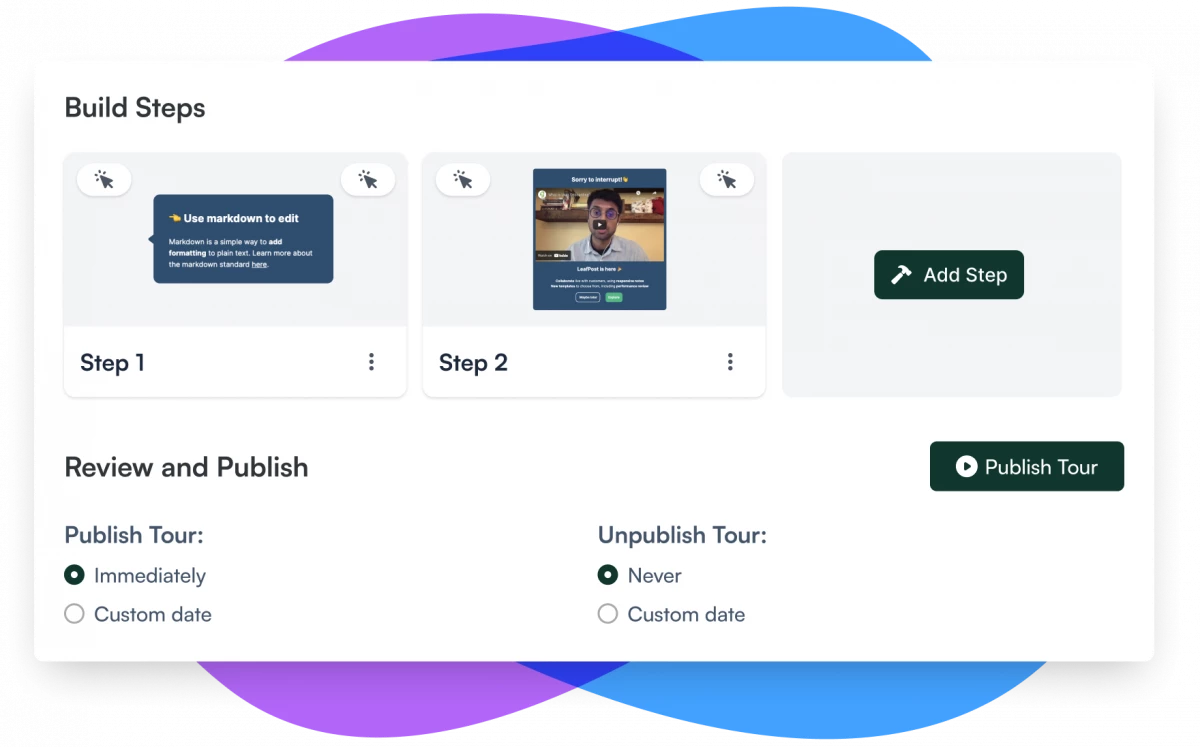
Chameleon is a product-growth platform that provides tools like tours, tooltips, surveys, and widgets to help create happier users without changing your product. Each of these is fully customizable in terms of design and targeting while also being perfomant. It also integrates with your existing tools like Segment, Hubspot, Slack, and Amplitude.
According to BuiltWith, as of May 2024, 204 of the top million websites deploy Chameleon. This is under half of the 556 who use Userpilot.
Key features
🚦 Product tours: Drive adoption of your product and features.
🧰 Tooltips: Help users figure out your product with popups and messages.
💬 Surveys: Get feedback from users with contextual and targeted surveys.
💡 Launchers: Use customizable widgets to move users throughout your product.
🙋 Help bar: Provide an easily accessible search bar to help users answer questions and solve problems themselves.
How does Chameleon compare to Userpilot?
The big advantage Chameleon has over Userpilot is that it is self-serve. Beyond this, it focuses on in-app engagement with tours, tooltips, and surveys, but lacks features like product analytics beyond these.
Why do companies use Chameleon?
According to G2 reviews, users choose Chameleon for:
Support: Many users praise Chameleon's support as being responsive and helpful. They also take customer suggestions to update and improve their product.
Integrations: Users like that it is easy to connect with the tools they already use like Segment.
Ease-of-use: Chameleon's user interface makes it easy for all types of users to set up tours, tooltips, and the rest of what they offer. Non-technical users like how they don't need to code, but still can customize how features look.
Bottom line
If you are just looking for in-app engagement, Chameleon can be a good alternative to Userpilot. For teams looking for a broader range of features (like product analytics or session replay), there are better options.
5. Userflow
- Founded: 2019
- Similar to: Chameleon
- Typical users: Product marketers, managers, and founders
- Typical customers: Product-led startups

What is Userflow?
Userflow is a user onboarding tool. It enables non-technical users to build customized in-app tours, checklists, surveys, and more without code. They were recently acquired by the user feedback tool Beamer.
According to BuiltWith, Userpilot is much more popular than Userflow. As of May 2024, only 21 of the top million sites use Userflow, while 556 use Userpilot.
Key features
🌊 Flow builder: A simple workspace to build onboarding flows easily. Connect multiple steps in their visual, no-code editor.
💬 Surveys: Get feedback from users and measure satisfaction with contextual and targeted surveys. Analyze responses in aggregate or per user.
✅ Tasks: Create onboarding checklists to anchor their experiences. Guide users through the app and automatically mark them complete when done.
📚 Resource center: Access helpful content directly in your app. Add search, contextualization, and even live chat.
How does Userflow compare to Userpilot?
Like Chameleon, Userflow is a more focused alternative to Userpilot. This means it has the in-app engagement tools like product tours and surveys, but misses out on broader product tools like product analytics.
Why do companies use Userflow?
Based on G2 reviews, users choose Userflow for:
1.Pre-built components: Users like the range of components and interactive features that they can use to drive engagement.
Ease-of-use: Userflow has an easy-to-use UI. Non-technical users appreciate how easy it is to create flows that once needed code to build and customize.
Focus: Where competitors are broad, multi-product platforms, Userflow focuses on entirely on onboarding. Users appreciate this specificity.
Bottom line
For teams looking specifically to improve their product's onboarding, Userflow can be a good alternative. For teams also looking to improve their product beyond onboarding, there are likely better options.
6. WalkMe
- Founded: 2011
- Similar to: Whatfix
- Typical users: HR, IT, and training teams
- Typical customers: Enterprises with large staffs like consultancies, healthcare, and sales

What is WalkMe?
WalkMe is a digital adoption platform that overlays any application. It tracks usage of internal software, automates repetitive tasks, and provides guidance to onboarding or lost users. Common uses include helping sales teams navigate a CRM like Salesforce, HR teams to onboard with Workday, or support teams to resolve issues with ServiceNow.
According to BuiltWith, as of May 2024, 1,014 of the top 1 million websites deploy WalkMe. This is nearly double Userpilot's 556. Again, this likely undercounts internal usage.
Key features
🙋♂️ Guidance: Create guidance for workflows that resolve friction. Provide content, notifications, and support at the right time.
🏗️ Workflows: Automate common tasks, and help employees save time with repetitive tasks.
🤝 Integrations: Integrate with Salesforce, Workday, ServiceNow, and more to speed up adoption and automate workflows.
📈 Analytics: Monitor application, workflow, and form analytics to get insights on how employees are using software.
How does WalkMe compare to Userpilot?
WalkMe is much more focused on internal tools. It includes most of the key features of Userpilot but built for adoption within an organization.
Why do companies use WalkMe?
According to G2 reviews, users like WalkMe the most for:
A strong support team: Quick-to-reply support team helps users solve their problems fast and make full use of the platform.
Easy content creation: The basics of WalkMe are quick to get started with. Users like that they can set up customized guidance content quickly.
Analytics: Support and HR teams value the metrics WalkMe provides about interactions with applications and the time it saves. This enables them to know what applications are important, confusing, or underused.
Bottom line
For enterprises looking for the tools of Userpilot but for their internal applications, WalkMe is a good alternative. Other alternatives focus more on external products.
7. Amplitude
- Founded: 2012
- Similar to: PostHog, Pendo
- Typical users: Product managers, data analysts, marketing teams
- Typical customers: Mid-size and large enterprises
What is Amplitude?
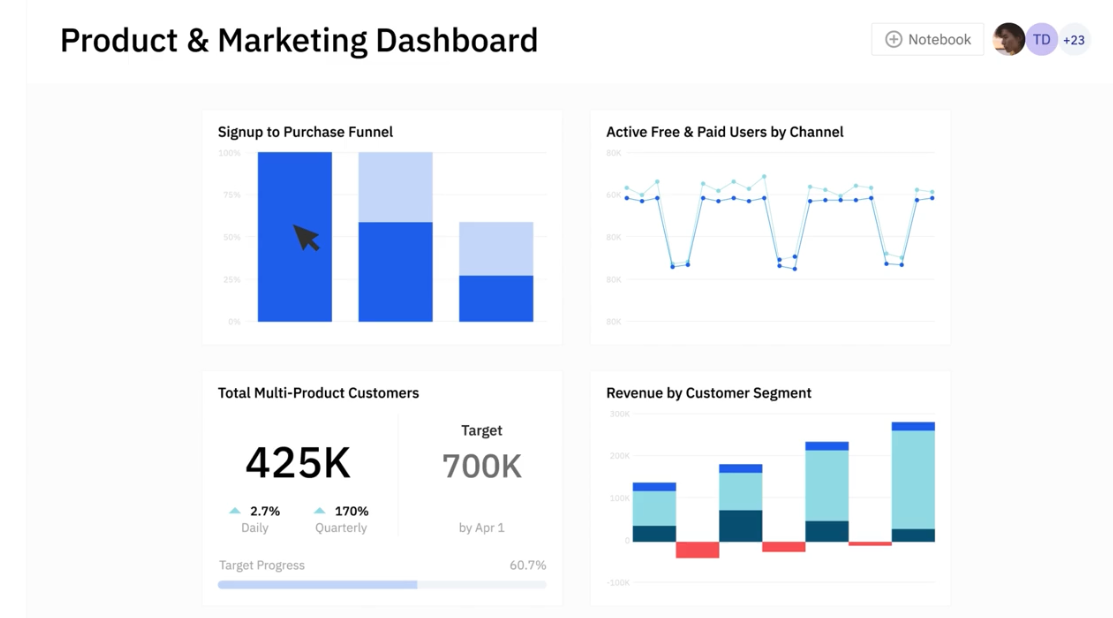
Amplitude is one of the original product analytics tools. Many large enterprise customers, like Ford, NBCUniversal, and Walmart rely on it. In recent years, it also added A/B testing, session replay, and a customer data platform to its offering.
According to BuiltWith, Amplitude is much more popular than Userpilot. As of May 2024, 10,713 of the top million sites deploy it. Only 556 use Userpilot.
Key features
📈 Product analytics: Funnel and retention analysis, user paths, behavioral cohorts, custom dashboards, and more.
🧪 A/B testing: Test new features on specific targets and analyze with primary, secondary, and counter metrics.
💁♂️ Customer data platform: Combine analytics data with third-party tools for data governance, identity resolution, and data federation.
🤖 AI insight builder: Generate insights based on natural language requests, like "What is my purchase conversion rate?".
📹 Session replay: Reconstruct user sessions to understand how people interact with your site and app. Visualize the reality behind user journeys and metrics.
How does Amplitude compare to Userpilot?
Amplitude does not feature in-app engagement tools, surveys, or autocapture. Beyond that, it has many of the key tools that help companies improve their products.
Why do companies use Amplitude?
According to G2 reviews, Amplitude users appreciate three key aspects:
Simple to use: Amplitude makes it easy for non-technical users to get insights about their product and make improvements. Amplitude is built for product managers and marketers, making it a popular choice for them.
Built-in A/B testing: Amplitude offers integrated experimentation features. This enables companies to run experiments on existing cohorts, and then analyze the data in a single place.
Become data-driven: Amplitude users appreciate it helps them become data-driven. It becomes easy to add data, visualize it, and make decisions. It makes data accessible to them.
Bottom line
If you don't need product tours, tooltips, guides, and surveys, Amplitude can make a good alternative. It is a popular choice and you can combine it with another more focused option on this list.
Is PostHog right for you?
Here's the (short) sales pitch.
We're biased, obviously, but we think PostHog is the perfect Userpilot replacement if:
- You value transparency. We're open source and open core.
- You want all the tools to help you build a better product (like feature flags and A/B testing).
- You want to try before you buy. We're self-serve with a generous free tier.
Check out our product pages and read our docs to learn more.
PostHog is an all-in-one developer platform for building successful products. We provide product analytics, web analytics, session replay, error tracking, feature flags, experiments, surveys, LLM analytics, data warehouse, CDP, and an AI product assistant to help debug your code, ship features faster, and keep all your usage and customer data in one stack.